



Blog / Category: App Marketing. Autor: Violetta Davidovich. / ASO for E-commerce: How to Promote Your App and Grow Organically

ASO for E-commerce: How to Promote Your App and Grow Organically

23.May.2025

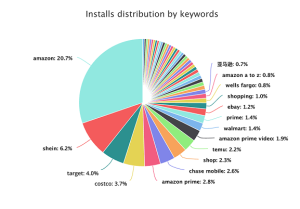
In 2025, major brands are still actively using ASO to promote their mobile apps. Their goals haven’t changed — boost app visibility, grow the keyword pool, and make apps more visually appealing. But in e-commerce, the standard ASO playbook no longer works across the board. More often, branded traffic outpaces general keyword traffic, and apps are increasingly downloaded through competitor brand searches.

For example:
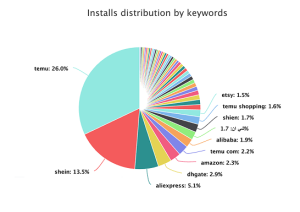
One of the key goals for developers is to build a promotion strategy that drives organic traffic. In e-commerce, a solid ASO strategy typically includes three main parts: text optimization, visual optimization, and reputation management.

Analyze the market and top apps.
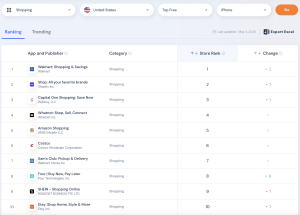
Pay attention to common mistakes and how e-commerce apps handle text metadata.
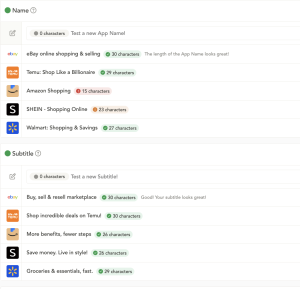
In 80% of cases, major brands go for marketing-style titles that don’t include keywords. For example, Temu uses phrases like “Shop,” “Shop like a Billionaire,” and “Billionaire.”

At first glance, “billionaire” seems like a mid-frequency keyword. But when you look at the actual search results, you’ll find mostly gaming apps. That means the app is being promoted through a non-relevant keyword — which can lead to low-quality, off-target traffic.

Another common mistake, besides using marketing slogans, is keyword duplication. For example, the branded term “Temu” appears in both the title and the subtitle. This doesn’t improve indexing for the keyword, but it does take up valuable character space that could be used for other important queries.

Keep key goals in mind when working on visual optimization

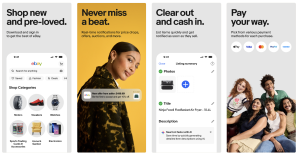
A study by Asodesk showed that users mainly focus on the first three screenshots in search results — simply because of limited screen space on mobile. Strong, eye-catching visuals can boost your conversion rate (CVR) by up to 28%, so visual optimization deserves close attention.

While analyzing the e-commerce niche, we identified a few key elements that should be reflected in the first screenshots:

  • easy product search by category  
  • info about featured brands or total number of available items 
  • promos and bonuses for new users  
  • emphasis on delivery details (speed, pickup options, free shipping, etc.)
  • well-designed screenshots highlighting popular products
Achieve growth with our expertise and unique tools

Let’s connect

Time your visual updates according to e-commerce app standards

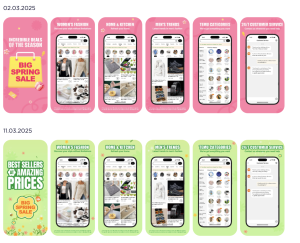
There’s no strict rule for how often to refresh your visuals, but regular updates are a good idea. It’s worth experimenting — not just with new color combos, but also by updating screenshots to reflect seasonal changes and holidays.

We recommend focusing not just on updating screenshots, but also on In-App Events. These help grab visual attention, promote the keyword used in the event, and reduce cost per install (CPI).

Manage ratings and reviews

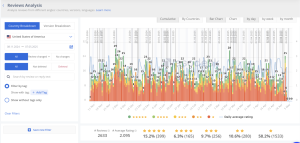
User reviews aren’t just feedback — they’re a powerful tool that affects both your app’s reputation and its visibility in the stores. Managing them takes a consistent, long-term effort. Negative reviews can show up in the recommendations section and turn away potential users before they even download an app.

Low ratings impact more than just how your app looks — they affect how it ranks. For example, Google Play may lower your app’s position in search results if the rating is too low.

Key takeaways and recommendations:

  • When responding to reviews, be specific and avoid generic templates. It’s important to monitor negative feedback and work toward solving user issues.
  • Clustering reviews can help identify common problems early and fix them before they escalate.
  • Well-written text metadata is one of the main drivers of app visibility.
  • Visual optimization is all about creating eye-catching graphics that highlight an app’s value. Strong visuals can significantly boost conversion rates.
  • Pay attention to user reviews — negative ratings can impact both visibility and overall ranking in the stores.

Promoting an e-commerce app isn’t just about being listed in the stores. It’s a strategic process that requires market analysis and a well-rounded ASO strategy. This approach helps build brand awareness, attract the right traffic, and strengthen your position in a competitive niche.

Written by

Violetta Davidovich davidovichveta2@gmail.com ASO Lead at WSS.media. Responsible for the text and visual optimization of apps across all markets. Studying Korean and Japanese to improve optimization in Asian countries. Works daily with audits and visual parsing of app pages in various niches, such as Foodtech, E-commerce, Utilities, Lifestyle, Education, and others. All articles by author

Also read: