



Blog / Category: App Marketing. Autor: Karina Krivoruchko. / Naming Fitness Apps: How to Create a Bold and Memorable Name

Naming Fitness Apps: How to Create a Bold and Memorable Name

Karina Krivoruchko | ASO specialist
10 min.
12.May.2025

Every day, more and more fitness apps appear on Google Play and the App Store. Most offer personalized workout plans and training programs. With so many similar apps out there, a good name can help yours stand out. It should be easy to remember and clearly indicate what your app is for: building muscle, losing weight, boosting endurance, or simply staying active.

Creating an effective name for a fitness app means understanding your target audience, knowing the latest health and wellness trends, and thinking through both the marketing and linguistic angles. Your app name should sound strong, dynamic, and motivating — something users will associate with energy, progress, and results.

To analyze the process of naming a fitness app, we’ll look at a few key aspects: sound and rhythm, associations, naming models, and keyword use. In the end, we’ll offer some practical recommendations for building a strong name in the fitness category.

Examples of popular fitness apps

Here are the apps we analyzed for this breakdown:

  • MyFitnessPal                                                        
  • Nike Training Club: Wellness
  • Fitbod Workout & Gym Planner                       
  • Strava: Run, Bike, Hike
  • Sweat: Fitness App For Women
  • Centr: Personal Fitness App
  • Seven – 7 Minute Workout
  • Jefit Workout Planner Gym Log
  • Adidas Running: Run Tracker
  • FitOn Workouts & Fitness Plans
  • StrongLifts Weight Lifting Log
  • StretchIt – Stretching Video-Classes
 

Visual analysis

Visual identity plays a big role in how fitness apps are perceived. It helps build trust, shapes your brand image, and creates a connection with an active lifestyle. Here are a few key design principles and how they influence perception:

  1. Minimalism and movement symbols: Most icons use clean, simple shapes. That makes them easy to recognize, even on small screens.
  2. Color choices that affect how your app is perceived:
  • Red, orange, and yellow signal energy, motivation, and strength.
  • Blue, black, and white create a sense of reliability, tech, and professionalism.

Let’s look at a few examples:

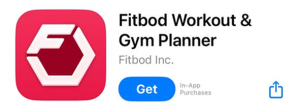
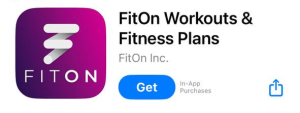
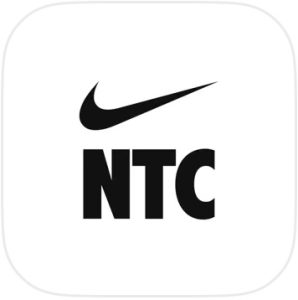
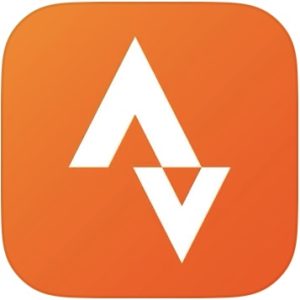
Nike Training Club sticks to Nike’s signature minimalist style. Strava uses a simple but bold arrow-shaped icon. FitOn leans into movement and style with its stylized “F.” Fitbod uses a rich pink that’s associated with energy.

 

Takeaways on visual design:

  1. Simplicity is key to recognition. The fewer details you include, the better.
  2. Bright colors like orange, red, and blue grab attention and signal energy.
  3. Monochrome black-and-white designs give the brand a sleek, premium feel.
  4. Fonts should be bold and clear to reflect a sports spirit.
  5. Dynamic elements like slanted letters, arrows, and motion icons help highlight activity.

In short, visual identity isn’t just about looks. It’s a strategic tool that shapes how users see your brand and whether they choose to download your app. A well-designed aesthetic supports the name and sets the right expectations.

Sound, rhythm, and flow

Let’s look at how some popular app names sound:

  • Strava – short, punchy, and dynamic. Reminiscent of “strive.”
  • Fitbod – combines “fit” and “bod” (body); sounds energetic.
  • Freeletics – merges “free” and “athletics.” Strong rhythm.
  • Sweat – a one-syllable word that gets straight to the point.
  • Jefit – a unique but easy-to-understand neologism.
  • Centr – a stylized spelling of “center,” gives the name a modern feel.
  • MyFitnessPal – a descriptive name, but “Pal” adds a friendly touch.

Most of these names are rhythmic and energetic, often using strong consonants like T, R, S, F, P, and D. Short names tend to be more memorable — but they’re also harder to trademark.

Commonly used words:

  • Fit/Fitness – highlights the category.
  • Train/Workout – focuses on training.
  • Run/Move/Sweat – adds a sense of motion.
  • Strong/Power – signals strength.
  • Club/Pal/Coach – suggests support and community.
Achieve growth with our expertise and unique tools

Let’s connect

Naming constructions in the fitness category

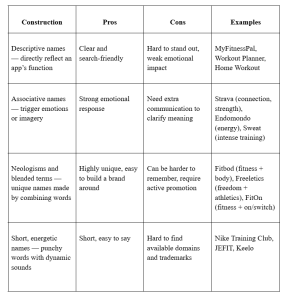
Choosing a naming model/construction depends on your app’s goals and how you plan to promote it. Descriptive names are simple but can get lost among competitors. Associative names build emotional connection but usually need extra marketing to explain the idea. Blended names and neologisms are unique, but often need clarification.

The ideal name strikes a balance between clarity, originality, and marketing impact. It should catch attention and create the right associations — motivating users to actually open and use your app.

The formula for a successful fitness app name

Creating a strong name for a fitness app means understanding the key elements that shape how your brand is perceived. For the name to work, there are three main things to consider: the main keyword, an add-on that strengthens the meaning, and the structure of the name itself.

1. The core word should instantly create associations with fitness, movement, or a healthy lifestyle.

Popular keywords:

  • Fit/Fitness – highlight the niche (MyFitnessPal, FitOn).
  • Train/Workout – focus on the workout process (Nike Training Club, Jefit Workout Planner).
  • Move/Run/Sweat – emphasize motion and energy (Strava, Sweat, Adidas Running).
  • Power/Strong – linked to strength and progress (StrongLifts, Centr).

2. The add-on helps clarify what the product does and strengthens its positioning:

  • About movement: Run/Sweat/Flow – highlight activity and energy
  • About strength: Strong/Lift/Core – bring in the idea of power and muscle building.
  • About support: Club/Coach/Pal – focus on community and guidance.

3. The title structure depends on your brand’s goals. It can employ one of these constructions:

  • Word blends/portmanteaus – combinations of two words to create something unique (Fitbod, Freeletics).
  • Short words – clean and strong, easy to remember (Sweat, Strava, Centr).
  • Simple but unique words – easy to read, but still stand out (Jefit, Centr).

Let’s use this formula to come up with a name for our own fitness app.

Say the app is designed for people who want to work out at home with limited time, but still want real results. They have busy schedules, demanding jobs, and need motivation. What matters to them is seeing progress and getting quick, effective workouts that fit into their lifestyle.

  • Core word: Fit, Gym, Train, Move 
  • Hint at quick progress: Quick, Fast, Snap, Blitz
  • Add on to highlight format: Home, 15Min, Express
  • Hint at motivation: Burn, Push, Power
  • Highlight simplicity: Easy, Smart, Flow
  • Imagery of something dynamic: Rush, Dash, Sprint
  • Emphasize results: Peak, Prime, Max

Name ideas:

  • QuickFit – short and clear, signals fast fitness.
  • FitBlitz – energetic and intense.
  • BurnDash – focused on fat burn and movement.
  • PeakMove – inspiring name about reaching your peak.
  • PowerSnap – short but high-impact workouts.

If this were a real app, I’d go with QuickFit — it gets the message across: fast, effective fitness. It’s also easy to remember. For the icon, I’d use high-contrast colors — red and black for energy, blue and white for reliability — with a human silhouette in motion at the center. This combo highlights the app’s focus on action and results.

Takeaways and tips

  1. Keep it simple and easy to remember. If the name is hard to say or recall, it won’t work.
  2. Add meaning. People should instantly get a sense of what the app is about.
  3. Check for uniqueness. Look into domain names, trademarks, and search results before making your final choice.
  4. Think long-term. If you plan to grow the product later, make sure the name won’t limit you.

Creating a strong name isn’t just about finding a nice word combination — it’s a strategic move that affects your positioning, recognition, and success on the market. Choose wisely!

Karina Krivoruchko is an ASO specialist with a background in journalism and design. She works on both text and visual optimization, conducts market analysis, and looks for creative, out-of-the-box solutions. Her approach blends creativity with strategy to help apps stand out and attract the right audience. In her free time, she enjoys exploring different types of coffee.


Written by

Karina Krivoruchko ASO specialist omskaya33@gmail.com Karina Krivoruchko is an ASO specialist with a background in journalism and design. She's an expert in making texts and visuals better, analyzing niches, and finding non-standard solutions. She mixes creativity and analysis to make apps stand out and appeal to the target audience. When she's not working, she likes to study and try different types of coffee. All articles by author

Also read: